
Selected Work

A few examples of how I think, build, and partner across strategy. From global campaign toolkits to loyalty models and social systems, these projects show how I turn complexity into clear direction for teams, clients, and creative work.
Client
Uber
Project
2026 World Cup
Client
Papa John’s
Project
Loyalty & Audience Strategy
Project
Social Strategy
Client
Fogo de Chão
Uber World Cup
Turning the world’s biggest sporting moment into a global demand-generation system.
Overview
Every four years, the World Cup changes how people move, eat, gather, and plan.
Fans need rides to airports, stadiums, bars, and watch parties. They need food for groups, groceries for hosting, retail for last-minute gear, and membership savings that make a month-long tournament easier to enjoy.
Uber had a role in almost every part of that behavior.
The challenge was making that role clear across 30+ markets, multiple lines of business, hundreds of assets, and a tournament full of local nuance.
The challenge
Uber needed one global platform that could drive demand across Rides, Eats, Uber One, merchants, earners, host cities, and non-host cities.
But the work had to do more than look consistent.
It had to help markets understand what to use, when to use it, how to adapt it, and which business priority each asset was meant to serve.
The strategic move
We turned the assignment from an overarching campaign into a modular, demand driving toolkit.
Instead of building one-off assets, we built a system around the real ways fans experience the tournament: traveling, hosting, ordering, saving, celebrating, and getting around host cities.
That system gave markets a shared creative platform with enough flexibility to make the work locally relevant.
What I owned
As strategic lead, I owned the logic behind the toolkit from day one through final handoff.
I helped define the deliverables list, messaging, RTBs, business priorities, market needs, channel logic, and asset requirements across Uber, Uber Eats, and Uber One.
My role stretched from the highest-level strategic architecture down to granular decisions around which products, offers, and SKUs belonged in specific assets.
I also worked deeply with creative, account, project management, production, development, tech, and client teams to keep the work clear, useable and moving.
The impact
The final toolkit brought Uber’s global World Cup strategy to life through 600+ assets across email, push, in-app, and other owned surfaces.
It included global campaign messaging and RTBs, communications across Mobility, Delivery, Uber One, merchants, and earners, templates for host and non-host cities, tournament-phase guidance, and clear handoff materials for local markets.
Together, the system enabled 30+ markets to activate around the tournament while maintaining one consistent global foundation. It became Uber’s biggest cross-line-of-business demand-generation campaign and its largest CRM initiative to date, with U.S. Mobility alone forecasted to drive $80M+ in incremental gross bookings.
The work turned a massive global opportunity into a flexible system markets could actually use.
Papa Rewards Reimagined
Rebuilding rewards around customer behavior, not one-size-fits-all discounts.
Overview
Papa John’s wanted its loyalty program to drive more than enrollment.
It needed to increase frequency, protect customer value, and create a clearer return for both the brand and its franchisees.
The challenge was that the existing program treated customers too similarly, even though their ordering habits, value, and likelihood to grow were very different.
The challenge
The loyalty model relied heavily on broad rewards and offers without a clear strategy for how different customers should be incentivized.
Nearly half of members received no meaningful value from the program, while customers who did redeem rewards were more stable and spent more over time.
The opportunity was to understand which behaviors created value, which customers were most likely to change, and how loyalty could encourage that movement.
The strategic move
We rebuilt the strategy around customer behavior.
Working alongside another strategist and a data scientist, I helped lead the analysis of Papa John’s first-party loyalty data. We challenged assumptions in the data, looked for patterns across ordering behavior, redemption, frequency, spend, and migration, and identified where the program was creating value or leaving it trapped.
That work resulted in 10 distinct behavioral clusters and a new way to think about loyalty: not as a universal discount program, but as a system for moving customers toward more valuable behaviors.
What I owned
I was involved across the full process, from data analysis and audience clustering through stakeholder interviews, competitive research, CRM workshops, program design, economic recommendations, and client presentations.
My role was to help turn complex customer data into a clear strategic story: what was happening, why it mattered, and what Papa John’s should do differently.
I also helped pressure-test the recommendation to ensure the audience strategy was not only analytically sound, but useful for CRM, loyalty design, franchisees, and future creative development.
The impact
The final recommendation included a new loyalty program structure, behavior-based audience clusters, personalized CRM opportunities, dynamic reward mechanics, and an implementation roadmap designed to increase frequency, reduce downward migration, and improve long-term customer value.
The recommendation was approved by the client and moved into implementation planning, including a new creative positioning workstream.
The work was ultimately paused following internal personnel changes at Papa John’s, but it gave the organization a clear, data-backed model for evolving loyalty from a broad rewards program into a more intentional business growth tool.
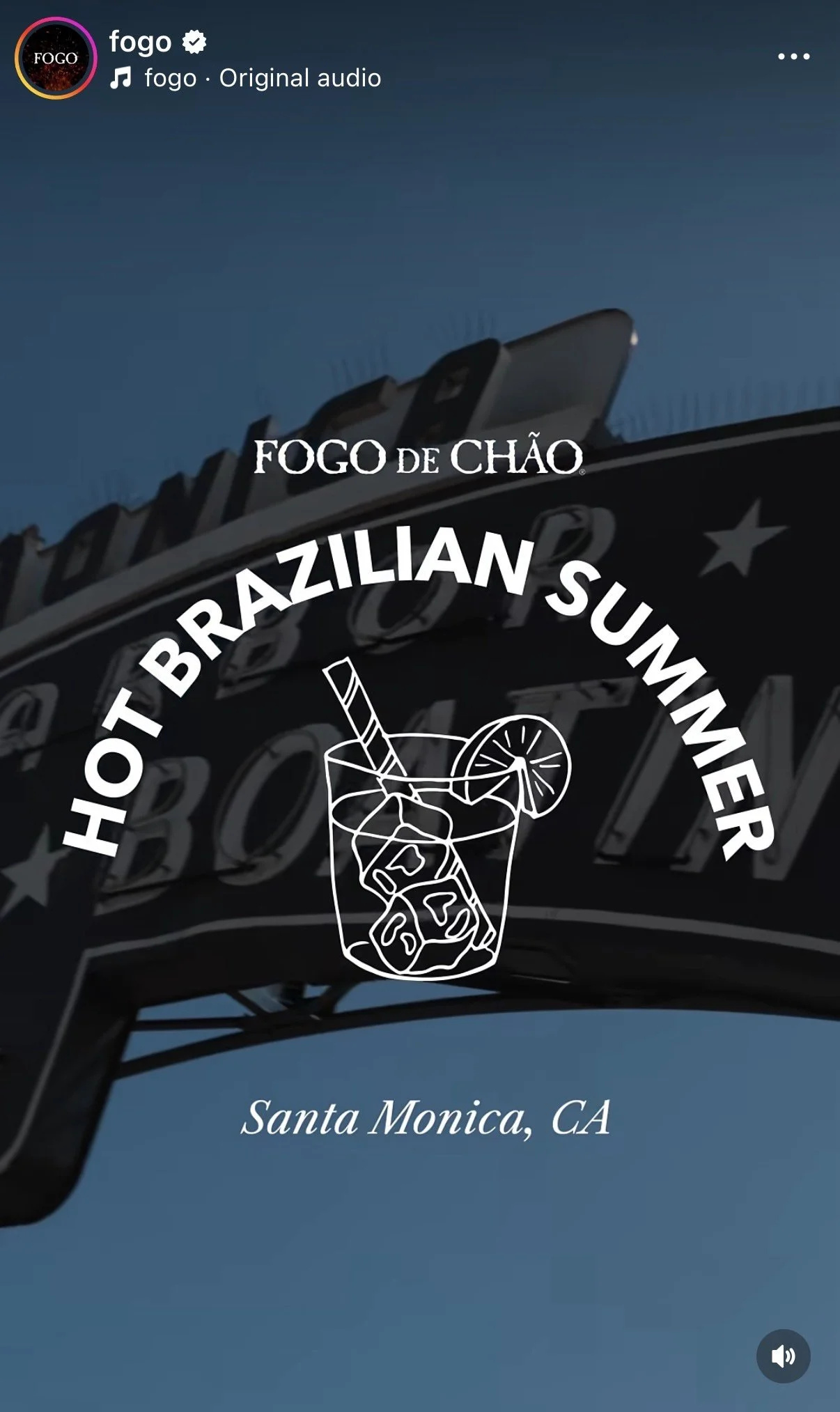
Fogo de Chão Social Strategy
Turning a paid-first feed into a brand people wanted to follow.
Overview
Fogo de Chão had a large social audience, but its content strategy was built around boosting nearly every post.
That approach created reach, but it was not building a stronger relationship with the people already following the brand. Organic engagement had stalled, the content felt overly promotional, and social was not showing the full personality or energy of the Fogo experience.
The challenge
Fogo needed to grow awareness and drive restaurant visits, but its reliance on paid amplification was masking a larger issue.
The brand was reaching people without consistently giving them a reason to engage, share, or come back.
The opportunity was to move from using social as a promotional channel to building a distinct social presence rooted in fandom, culture, craveability, and community.
The strategic move
We introduced a new north star: Ignite the Fogo Fandom.
The strategy shifted the focus from boosting everything to earning attention organically first. We developed content designed to engage Fogo’s existing audience, then used paid amplification to scale the ideas already proving they could connect.
The new approach brought together social listening, platform behavior, cultural trends, community engagement, and performance data to shape what the brand made and how it showed up.
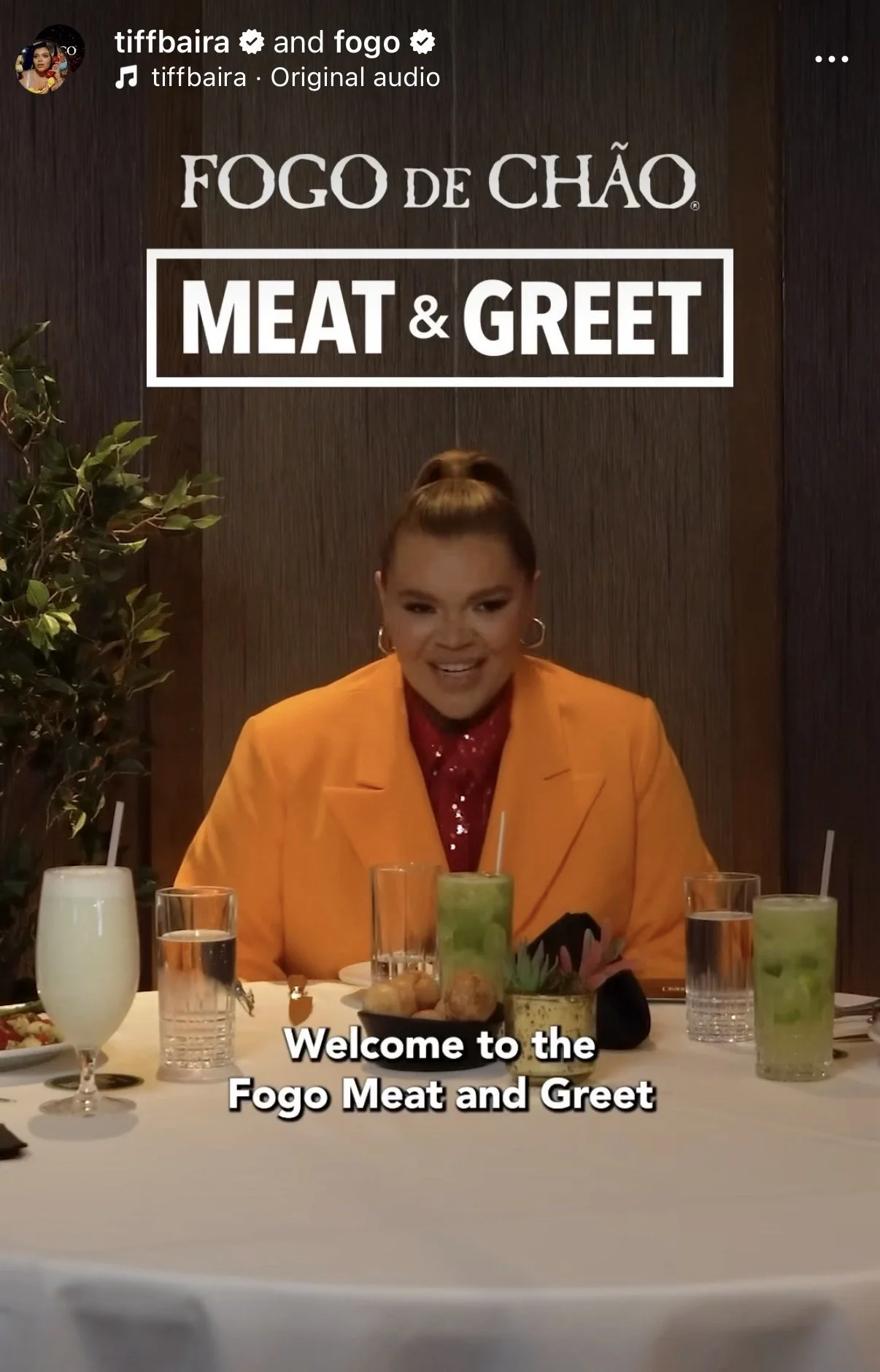
It also pushed Fogo beyond the polished, promotional content it was comfortable with and into a more human, entertaining, and platform-native side of social.
What I owned
I led the account’s strategy day to day across both organic and boosted social.
I owned the strategic direction, reporting, content calendar, performance analysis, client presentations, and ongoing optimization of the work. I was deeply involved in content development and creative reviews, using performance and audience behavior to help the team understand what to make more of, what to stop doing, and where the brand needed to take bigger creative risks.
A major part of my role was helping the client become comfortable with work that initially felt unfamiliar to them, including more trend-driven, human-centered, humorous, and culturally responsive content.
The impact
The refreshed strategy introduced a new content framework, organic measurement approach, and paid amplification model designed to build long-term engagement rather than short-term reach alone.
Instead of automatically boosting every post, content was given time to perform organically before the strongest work received paid support. The team also introduced more platform-specific, craveable, trend-led, and human-centered content across TikTok, Instagram, and Facebook.
Across 2024, Fogo’s total engagements increased 38% year over year across all active platforms. TikTok saw the strongest transformation, with impressions increasing 141%, engagements increasing more than 1,100%, engagement rate increasing more than 400%, and net audience growth increasing more than 2,300%.
The work introduced Fogo to a new side of social media and proved that taking the brand beyond its comfort zone could build both stronger performance and a more distinctive relationship with its audience.